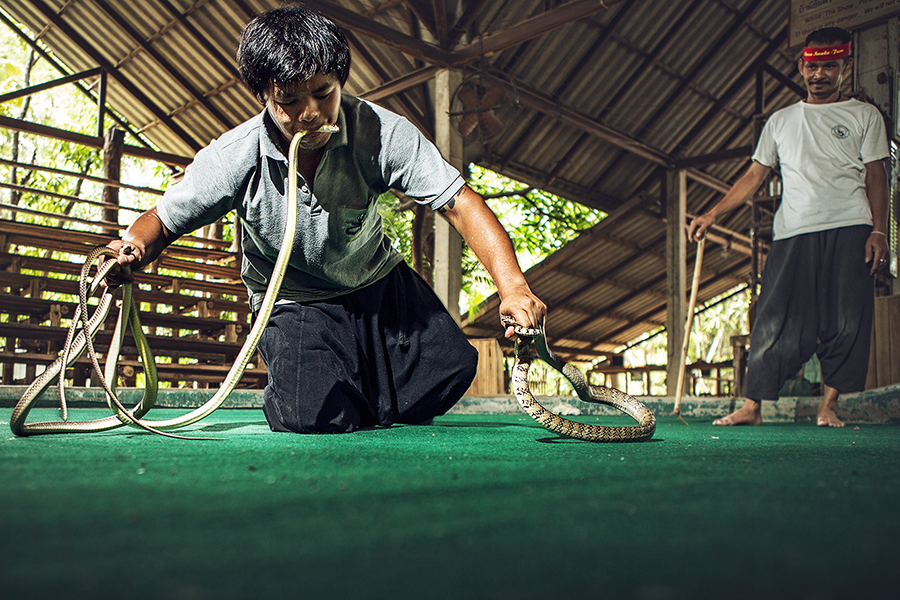
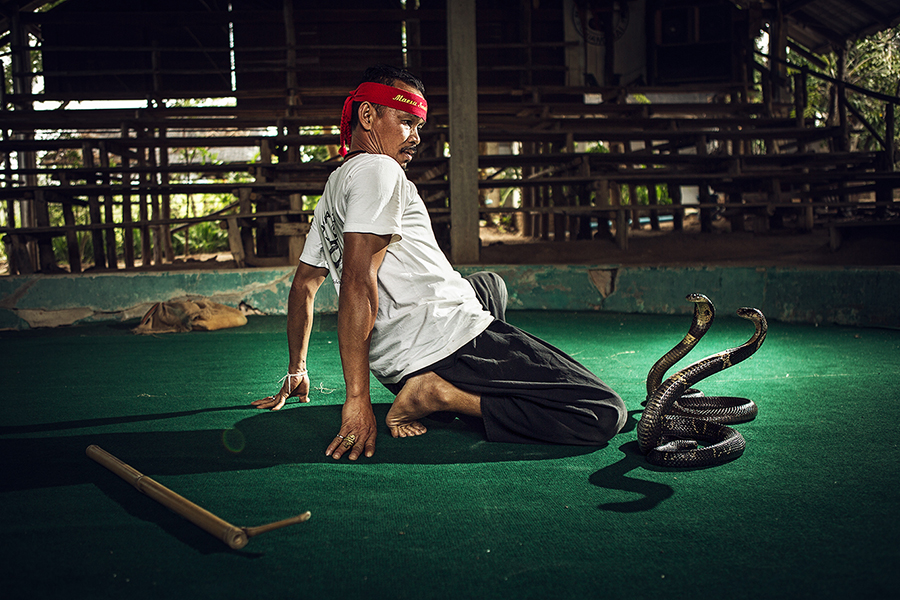
With his shaved head, a thin patch of hair at the back, and faded traditional tattoos marking his body, Tum carries the physical record of his profession. After more than two decades of performances, he has lost a finger and permanently damaged others due to repeated cobra bites. His collaborator, Mr. Feng, shows similar signs: scars etched along his arms, reminders of close encounters that did not go unnoticed.
The entrance is simple. A small ticket booth collects a modest fee, granting access to a basic seating area facing a ring. Music crackles through a speaker as a voice announces the beginning of the show.
Inside the ring, the performance begins without embellishment. Tum and Feng engage directly with the snakes—provoking, handling, and evading them in a controlled yet unpredictable exchange. The tension builds in moments like the so-called “kiss of the cobra,” when Tum brings his face within inches of a striking snake, or when the rhythm falters and control seems briefly uncertain.
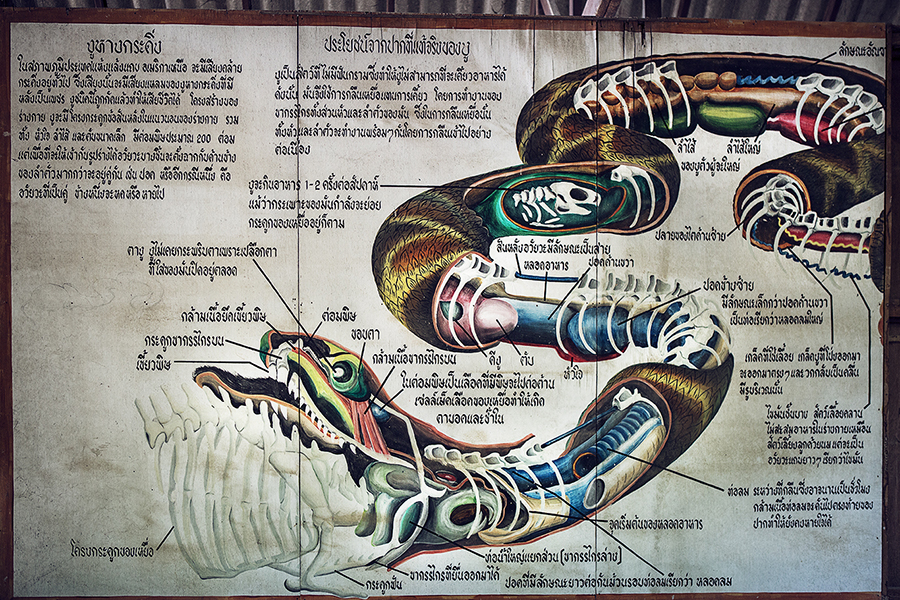
When the performance ends, the handlers present the snakes’ fangs and venom to the audience. The gesture is deliberate: proof that the animals have not been defanged or altered, reinforcing the authenticity—and the danger—of what has just taken place.
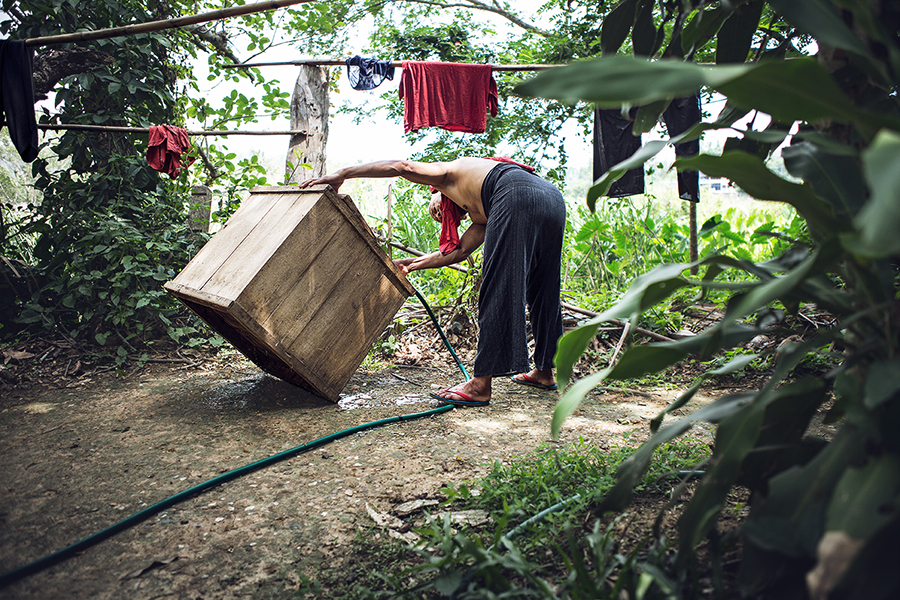
Shows are repeated several times a day, sometimes for only a few spectators. The animals involved—cobras, pythons, banded kraits, among others—are often sourced from nearby जंगल areas or acquired through local markets.
In this part of Thailand, snakes carry deep symbolic meaning, often associated with the tension between protection and threat, the sacred and the feared. Yet beyond symbolism lies a practical reality: performances like these draw visitors to areas that might otherwise remain outside the main tourist routes.
While such shows face increasing criticism, particularly from Western audiences concerned with animal welfare, they persist as a source of livelihood. For Tum and his collaborators, the work is both heritage and necessity. In one instance, an American visitor spent six months training under Tum, seeking to learn the techniques behind the performance.
The scene in Mae Rim reflects a broader tension—between cultural tradition, economic survival, and the evolving expectations of a global audience.