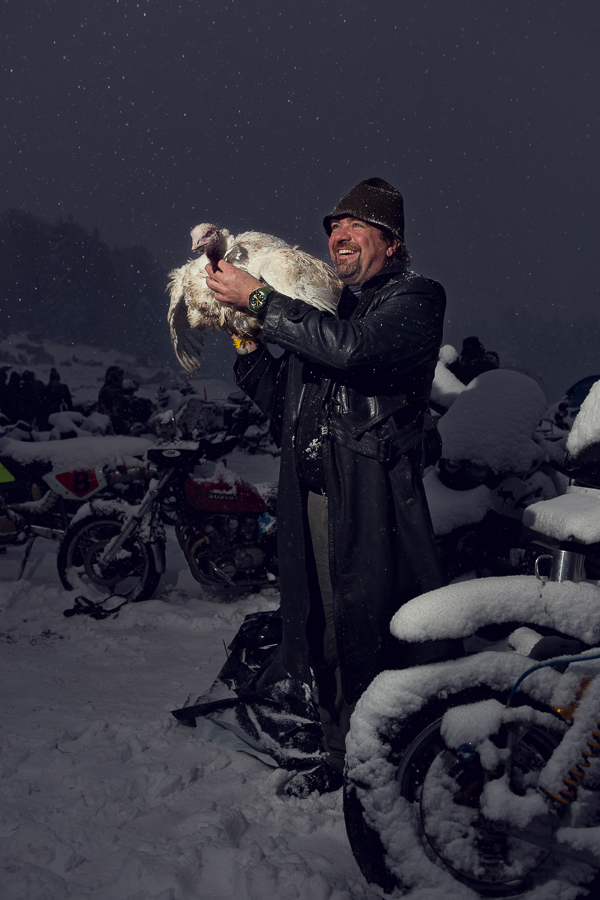
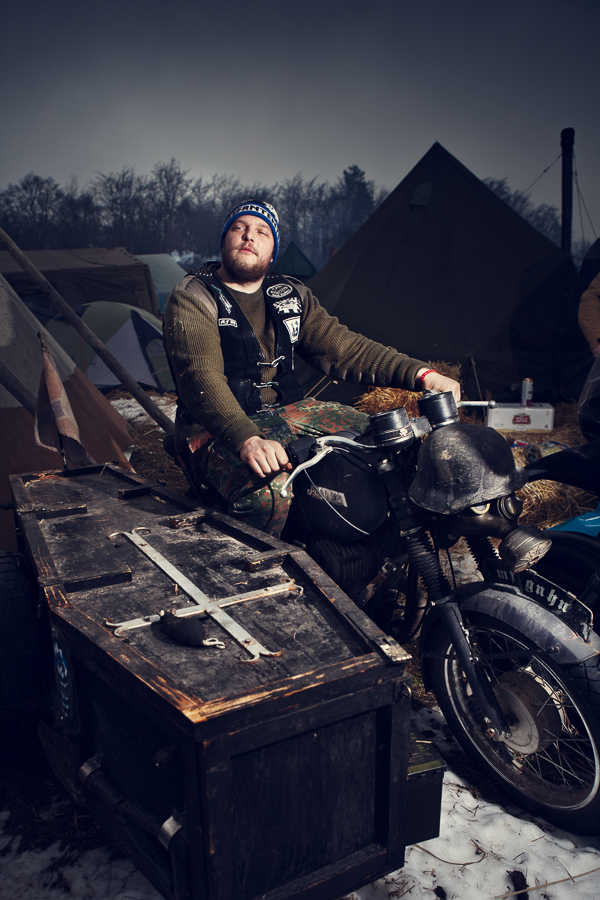
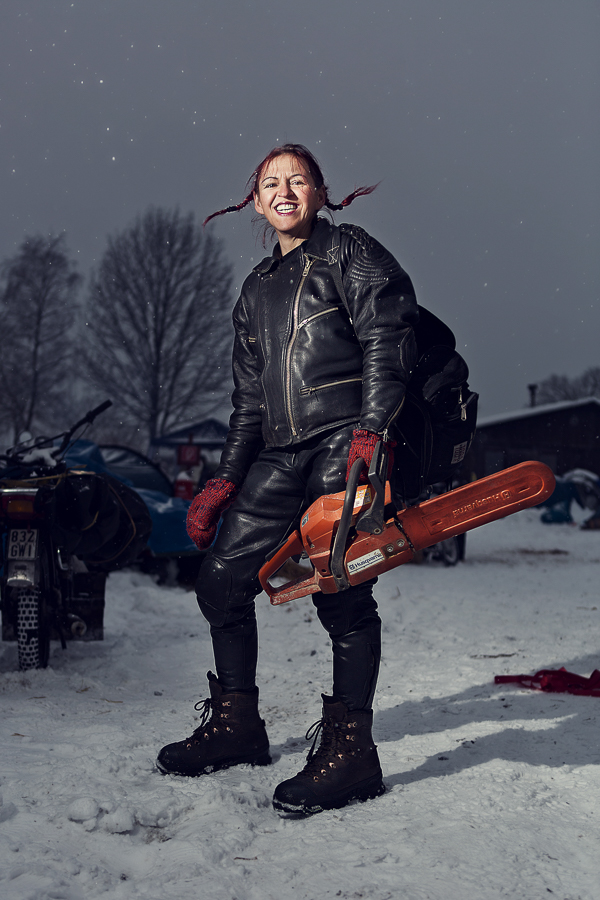
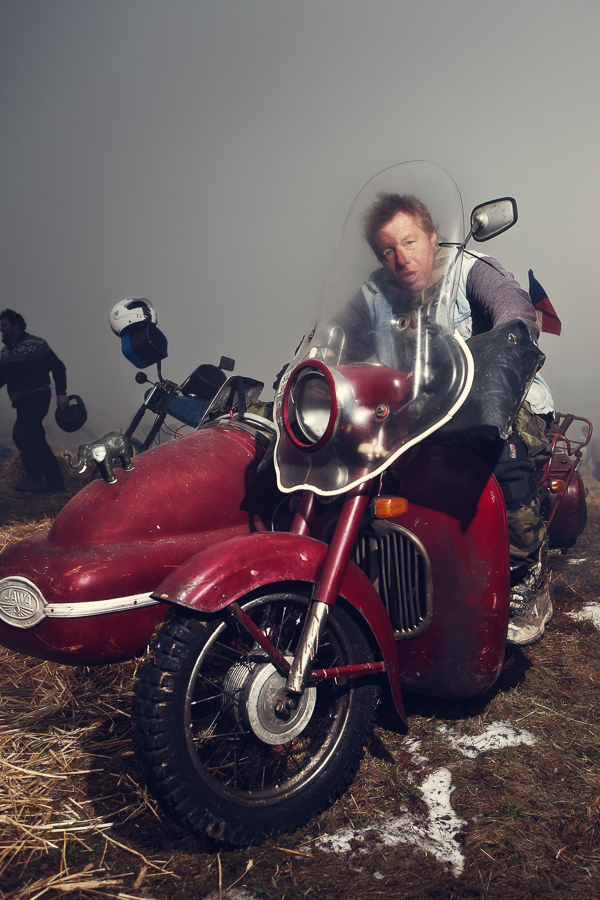
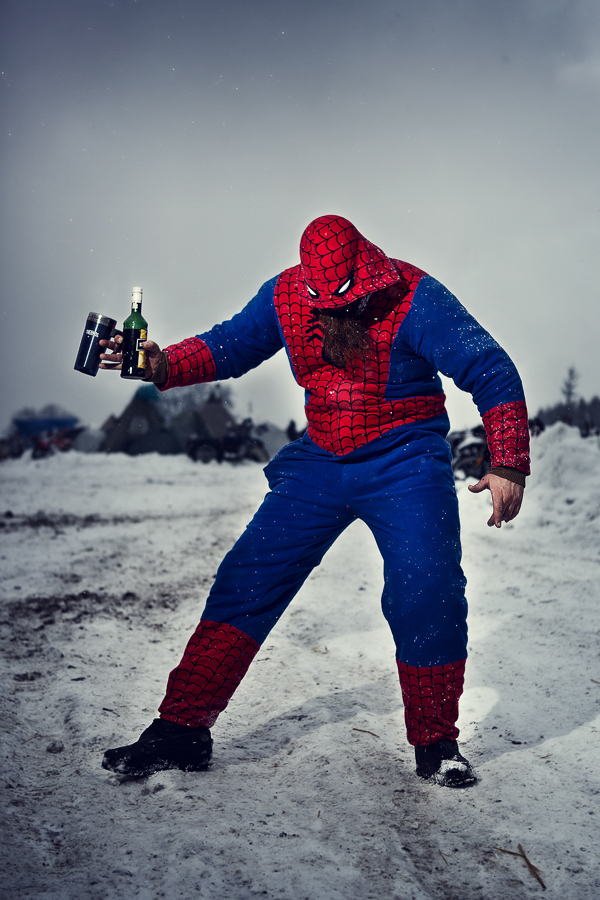
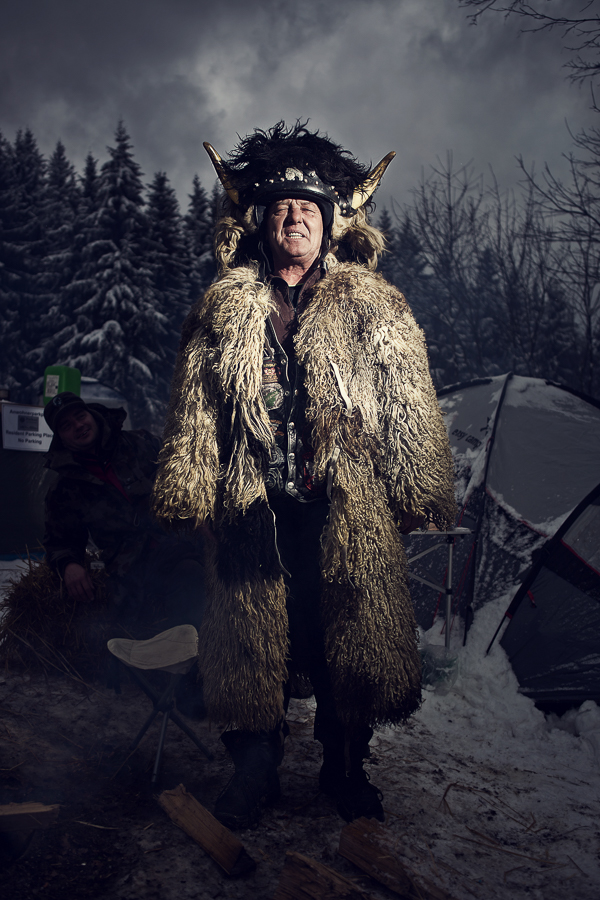
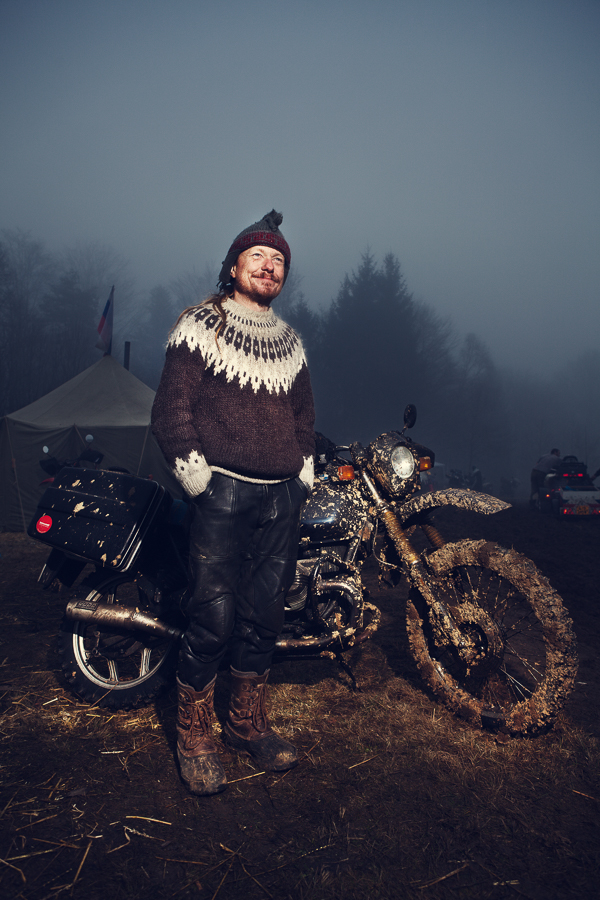
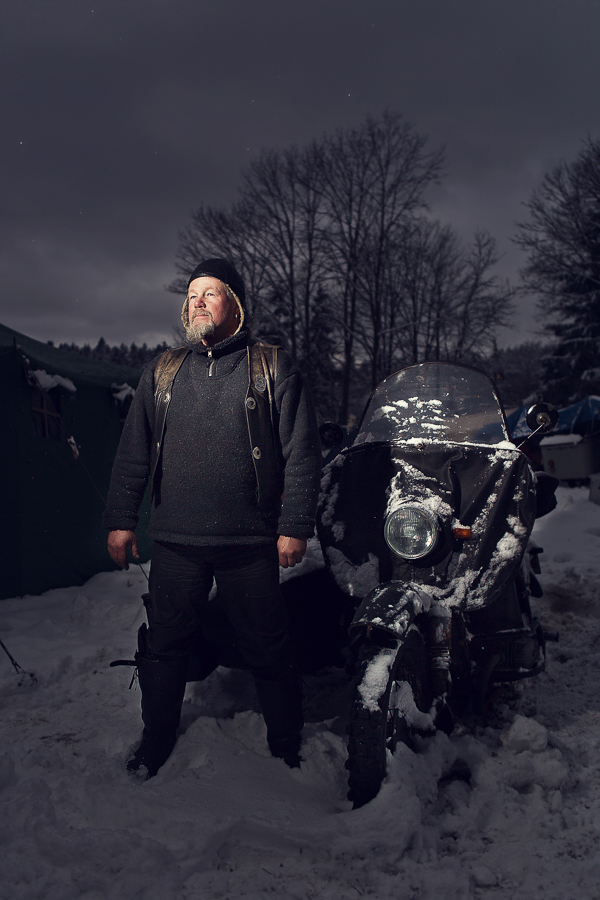
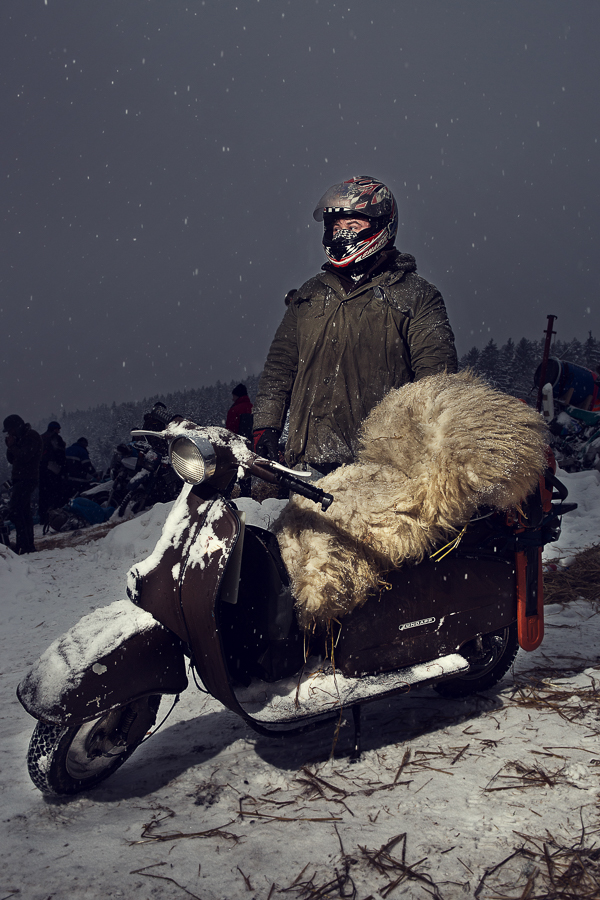
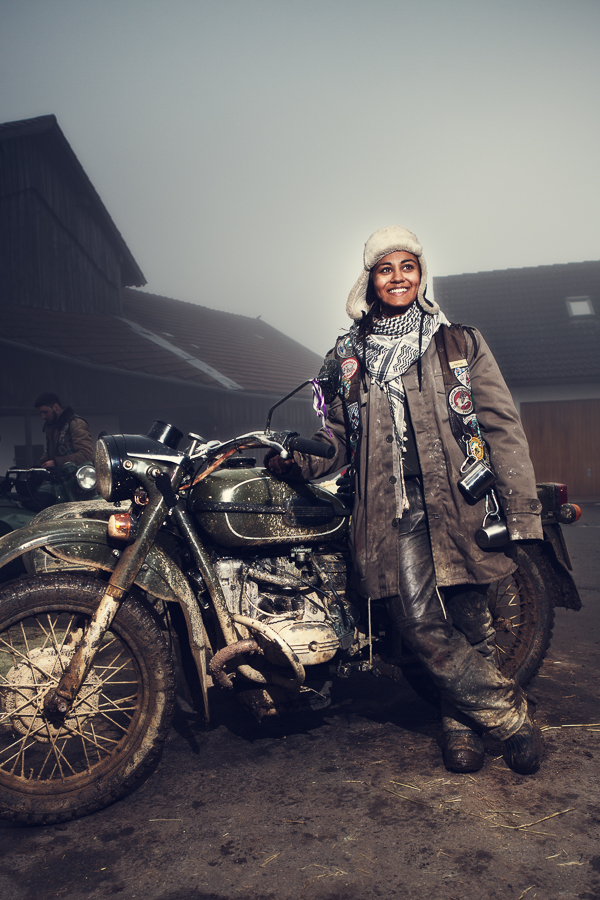
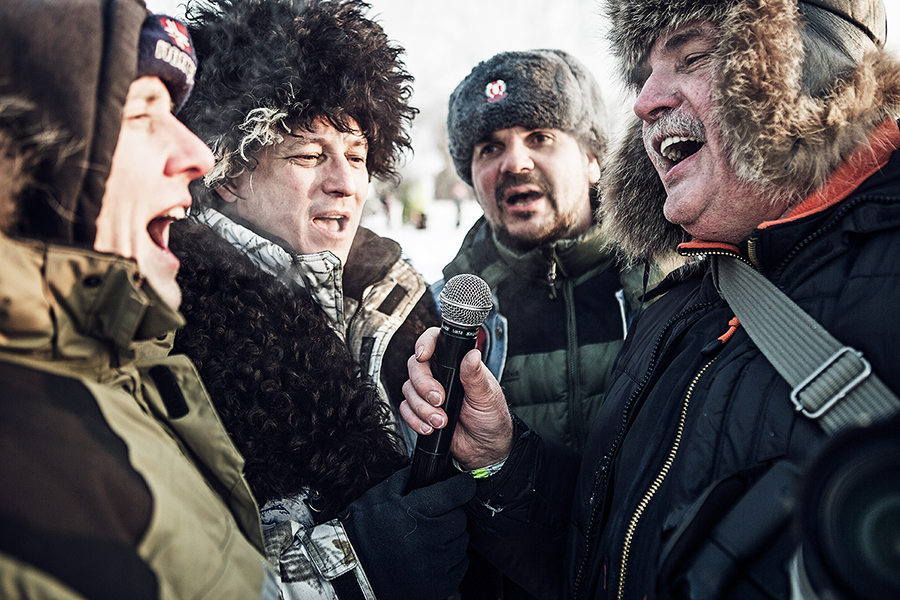
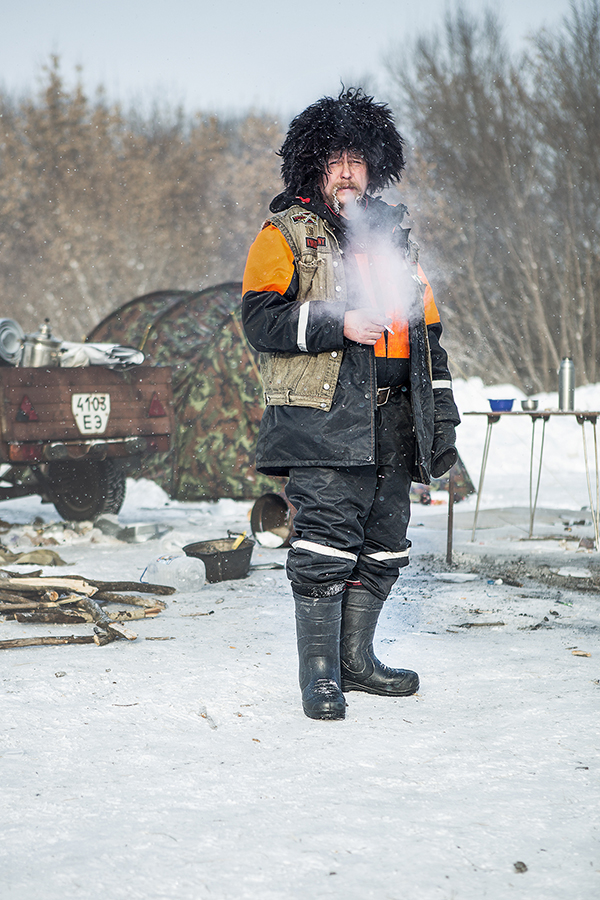
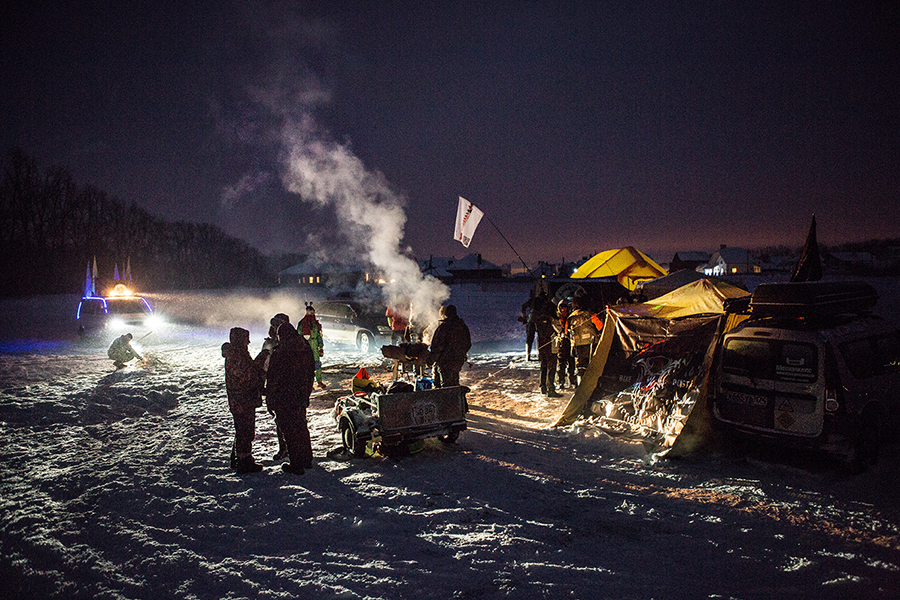
Most arrive the on the first night, roaring in on bikes heavy with chainsaws, stoves, tents and so much beer. It is invariably bitterly cold, but no one seems to mind. For the Elefantentreffen participants, the snow and the cold, the smell of smoke and roasted pork are the essential requirements for happiness.
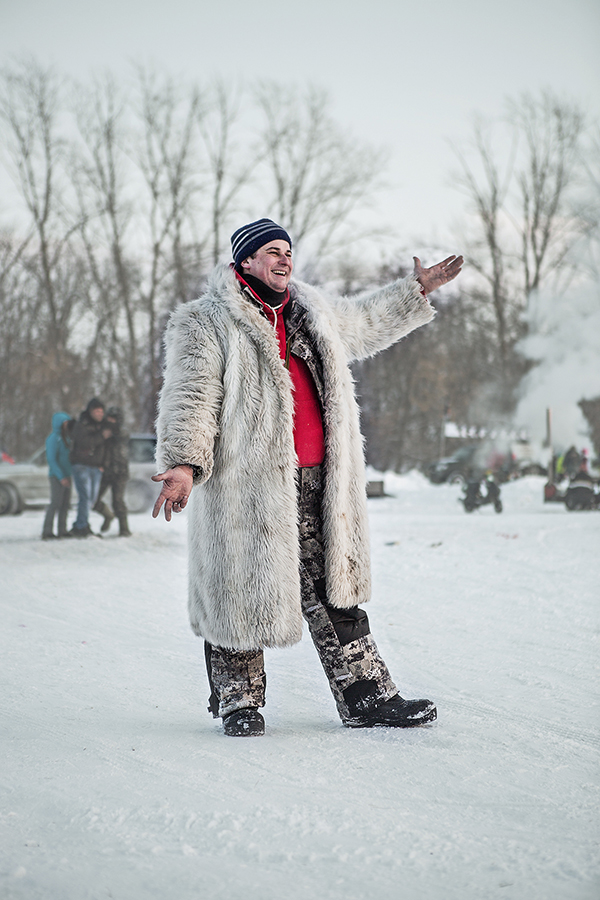
I wanted to portray the riders as “movie heroes,” which certainly comes across in their strong poses and big smiles. I was fascinated by the people, who represent all walks of life, from farmers and students to engineers and doctors. The beauty of this rally it’s that to all the people no matter who you are, how you are and what you do. Everybody is equal as long as they get there. Being yourself for three days, beyond the every day life and remove the mask you wear, to show a part of what you want to be really. At least a little.












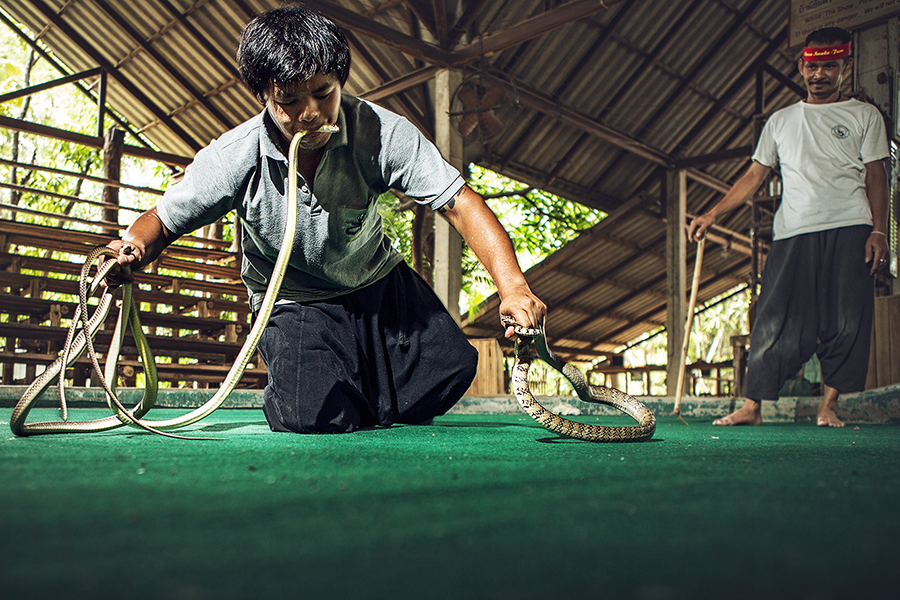
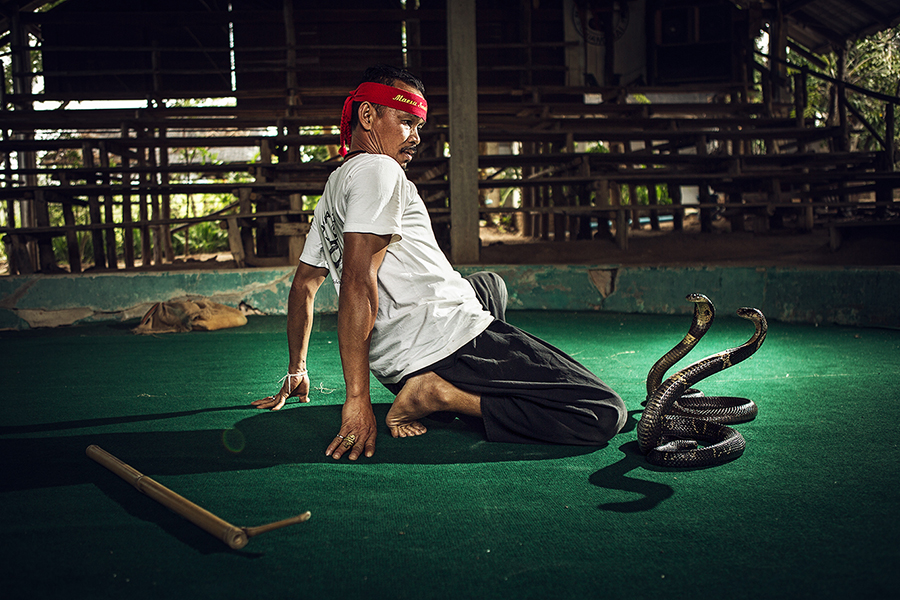
With his shaved head, a thin patch of hair at the back, and faded traditional tattoos marking his body, Tum carries the physical record of his profession. After more than two decades of performances, he has lost a finger and permanently damaged others due to repeated cobra bites. His collaborator, Mr. Feng, shows similar signs: scars etched along his arms, reminders of close encounters that did not go unnoticed.
The entrance is simple. A small ticket booth collects a modest fee, granting access to a basic seating area facing a ring. Music crackles through a speaker as a voice announces the beginning of the show.
Inside the ring, the performance begins without embellishment. Tum and Feng engage directly with the snakes—provoking, handling, and evading them in a controlled yet unpredictable exchange. The tension builds in moments like the so-called “kiss of the cobra,” when Tum brings his face within inches of a striking snake, or when the rhythm falters and control seems briefly uncertain.
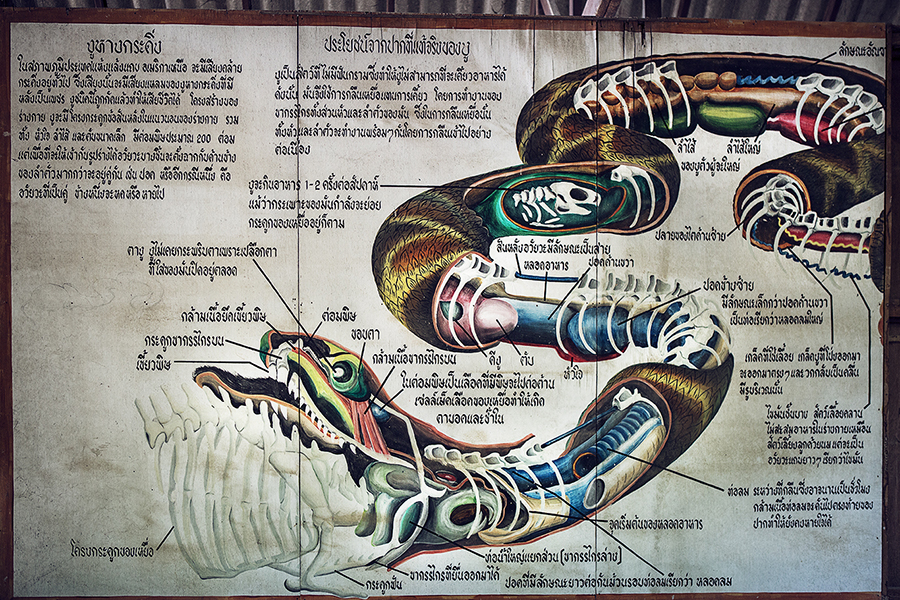
When the performance ends, the handlers present the snakes’ fangs and venom to the audience. The gesture is deliberate: proof that the animals have not been defanged or altered, reinforcing the authenticity—and the danger—of what has just taken place.
Shows are repeated several times a day, sometimes for only a few spectators. The animals involved—cobras, pythons, banded kraits, among others—are often sourced from nearby जंगल areas or acquired through local markets.
In this part of Thailand, snakes carry deep symbolic meaning, often associated with the tension between protection and threat, the sacred and the feared. Yet beyond symbolism lies a practical reality: performances like these draw visitors to areas that might otherwise remain outside the main tourist routes.
While such shows face increasing criticism, particularly from Western audiences concerned with animal welfare, they persist as a source of livelihood. For Tum and his collaborators, the work is both heritage and necessity. In one instance, an American visitor spent six months training under Tum, seeking to learn the techniques behind the performance.
The scene in Mae Rim reflects a broader tension—between cultural tradition, economic survival, and the evolving expectations of a global audience.





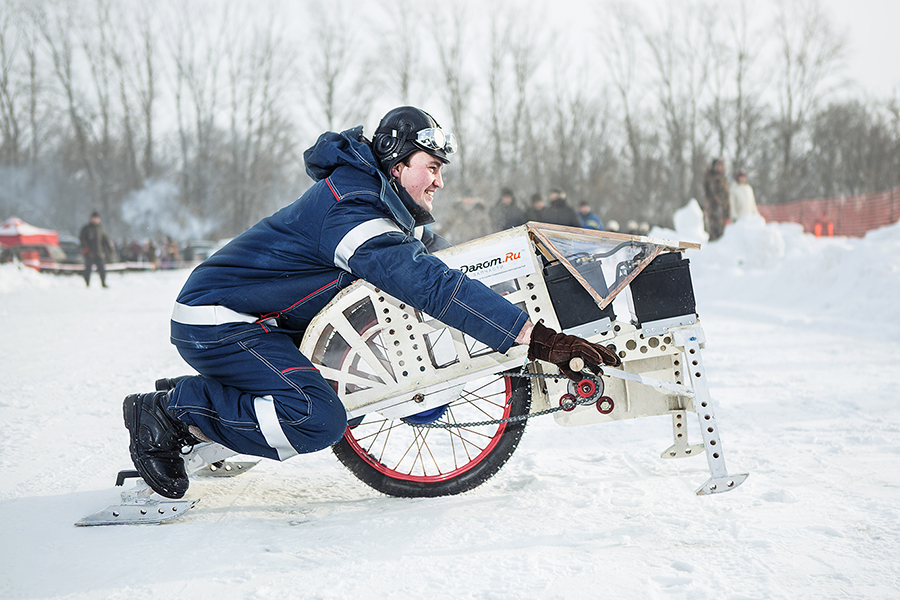
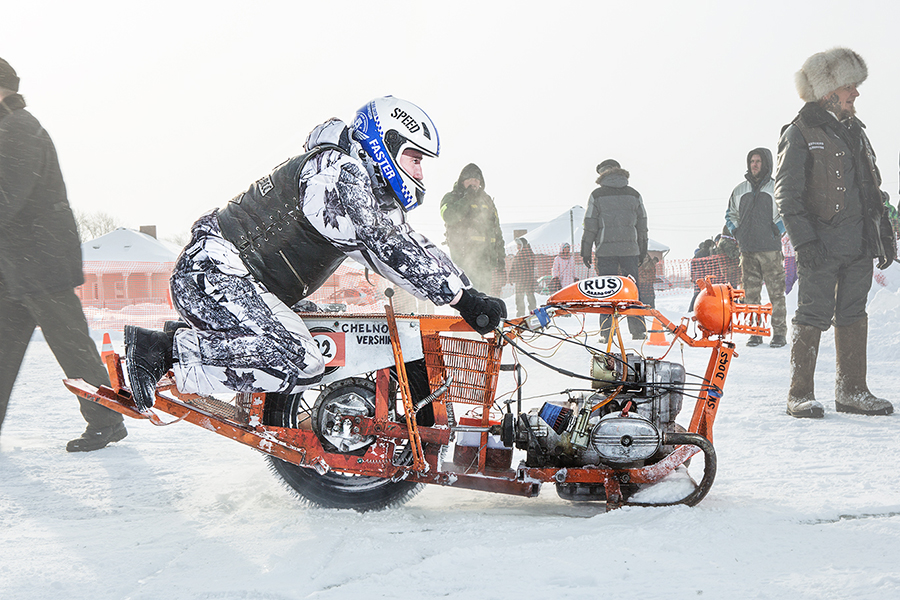
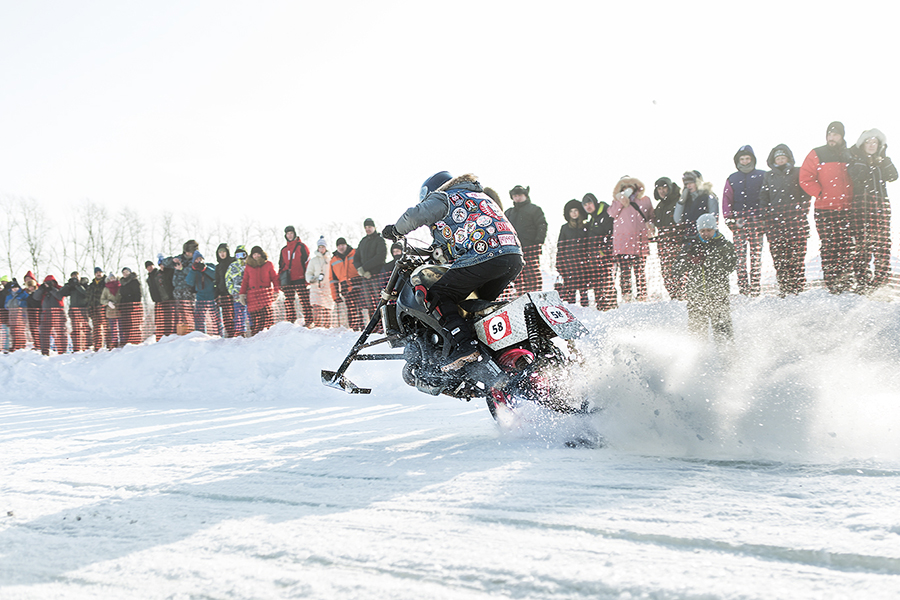
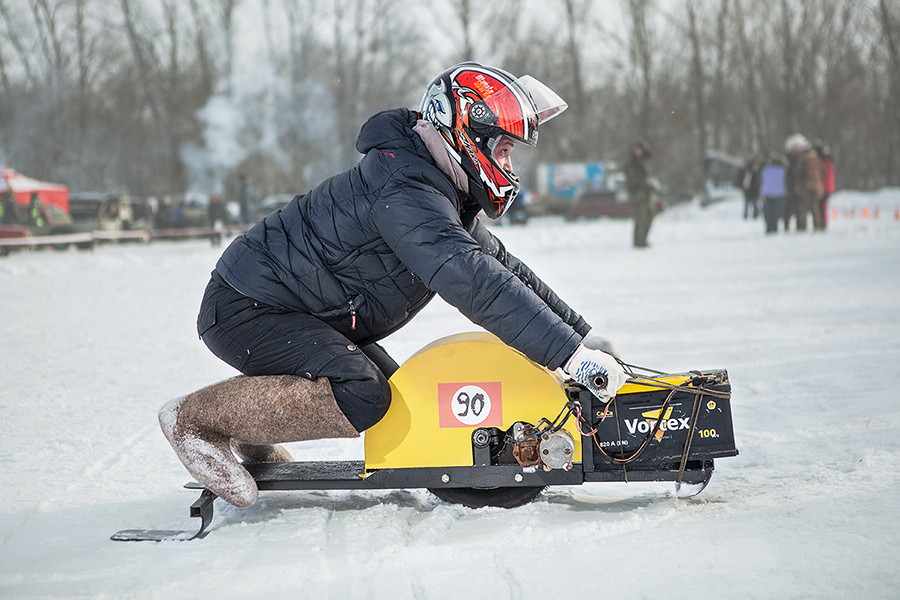
Unimotorcyle racing started in the 1980s in Florida, a fact few will find surprising. The "sport" quickly spread to Europe and beyond. A Russian unimotocyclist named Dmitry Gorbunov attended the Elefantentreffen biker rally in Germany in 2002, and thought it wasn't nutty enough. So two years later, he decided to go racing on ice.
Location: the snow-blanketed town of Togliatti, Russia, where the temperature never climbed above -10 degrees Fahrenheit. The event drew about 1,000 spectators and 35 unimoto riders, many of whom came from hundreds of miles away.
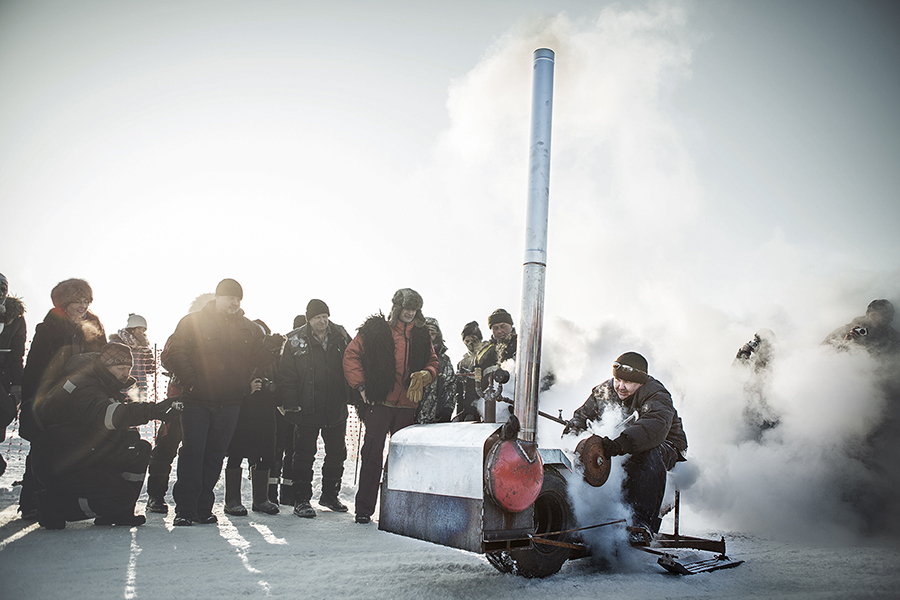
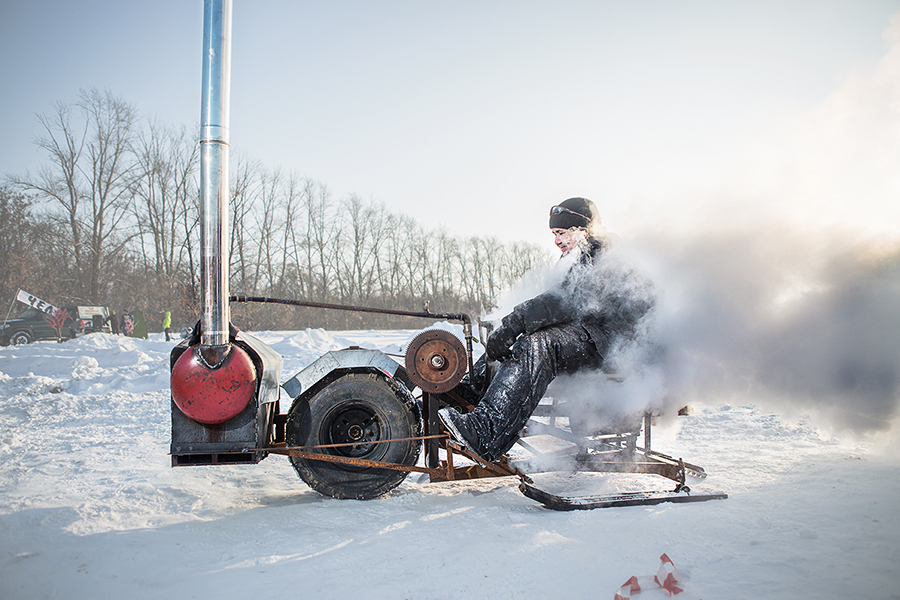
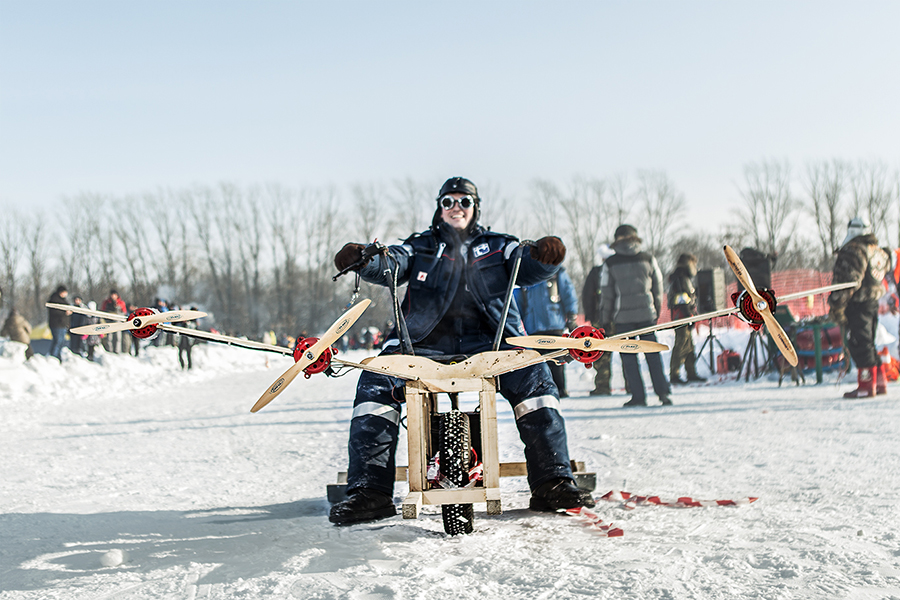
Races began each day around 11 am and continued through the afternoon. Riders astride homemade machines seemingly inspired by Mad Max vied to post the fastest times. Many of them rode contraptions adapted from Honda and Yamaha motorcycles, with runners crafted from shovels and other stuff you'd find in the garage. The more eclectic machines ran on electricity and even steam, while at least one featured four propellers. One guy even cobbled together something that looks a lot like a pulse jet.
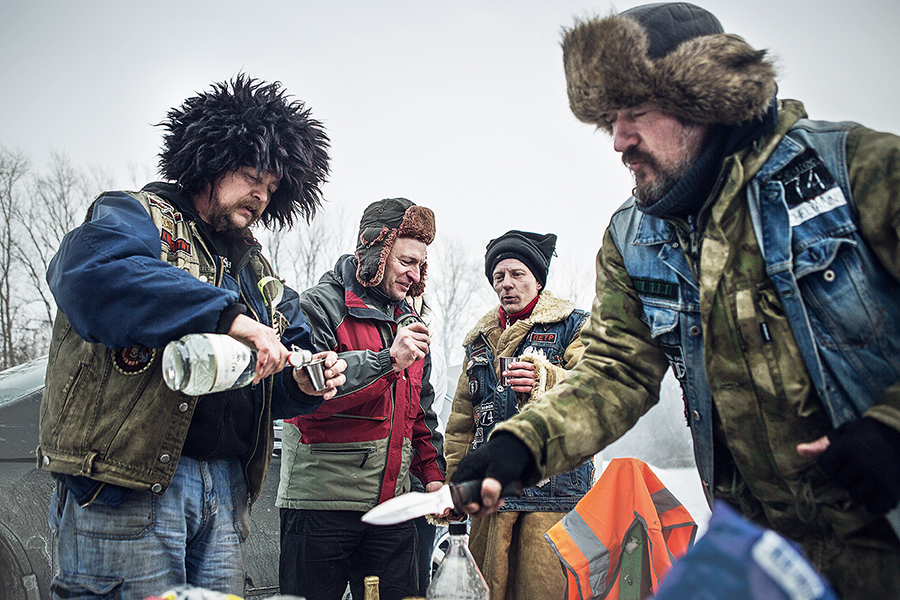
No matter what made them go, it was loud. “Like a lion that roars when you cut its balls". He saw a few unimotos scuttle out of control across the ice or catch fire after their motors overheated, but no one seemed too bothered. The fastest racer gets a trophy and an enormous hunting knife, the words "Snow Dogs" engraved into a handle shaped like a dog's head.
When the day's racing is done, the real party begins. People eat, drink, and sing karaoke until the wee hours. “A passionate expression of the joy of life that motors and vodka bring.”












“The aim of every artist is to arrest motion, which is life, by artificial means and hold it fixed so that a hundred years later, when a stranger looks at it, it moves again since it is life.” William Faulkner
99 it's the number of nights that I have spent in clubs and discotheques.
![]()
![]()
![]()
![]()
![]()
![]()
![]()
![]()
![]()
![]()
![]()
![]()
![]()
![]()
![]()
![]()
![]()
![]()
![]()
![]()
![]()
![]()
![]()
![]()
![]()
![]()
![]()
![]()
![]()
![]()
![]()
![]()
![]()
![]()
![]()
![]()
![]()
![]()
![]()
![]()
![]()
![]()


It’s held in late January in the Bavarian Forest. Everyone takes a different route, and getting there through the sleet and snow is half the fun.
Most arrive the on the first night, roaring in on bikes heavy with chainsaws, stoves, tents and so much beer. It is invariably bitterly cold, but no one seems to mind. For the Elefantentreffen participants, the snow and the cold, the smell of smoke and roasted pork are the essential requirements for happiness.
I was fascinated by the people, who represent all walks of life, from farmers and students to engineers and doctors. The beauty of this rally it’s that to all the people no matter who you are, how you are and what you do. Everybody is equal as long as they get there. Being yourself for three days, beyond the life of every day and remove the mask you wear, to show a part of what you want to be really. At least a little.


